
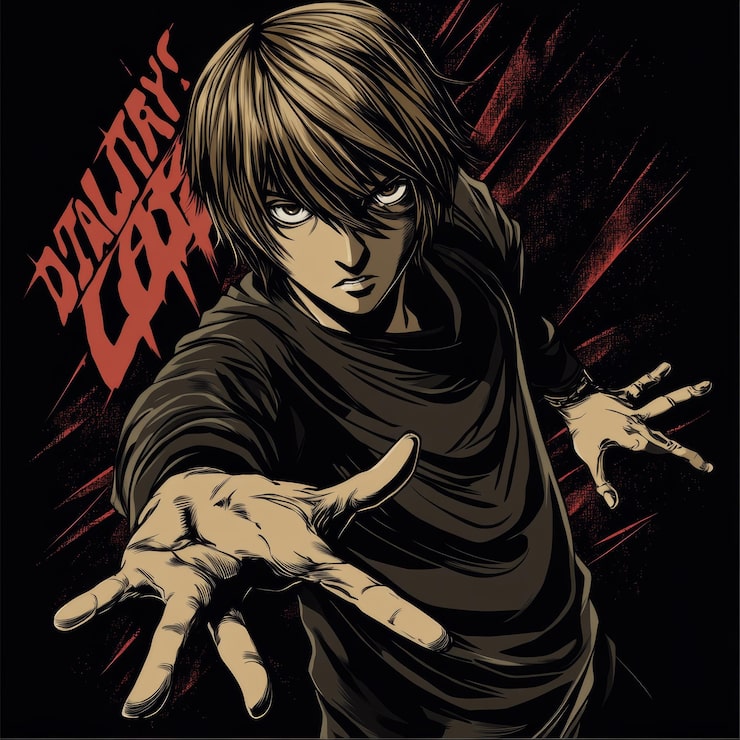
Death Note manga built its reputation on tension, manipulation and psychological warfare. Violence exists, sometimes in brutal ways, though the series rarely relies on gore alone. The danger comes from the atmosphere. A simple notebook becomes a loaded weapon, capable of destroying lives with a single name written on a page. That idea hangs over every chapter like a storm cloud ready to split the sky.
Light Yagami does not fight with fists or swords. He fights with intelligence, fear and control. Readers watch a brilliant student slowly transform into someone obsessed with power. The manga pushes moral limits without drowning every scene in blood. Many moments feel disturbing because they appear calm on the surface. A conversation between characters can carry more pressure than an action sequence in another series.
The visual style also shapes the experience. Death Note psychological tension comes from facial expressions, silence and calculated dialogue. Fans who collect manga items or detailed anime figures often appreciate how iconic the characters look even during quiet scenes. Ryuk’s grin, L’s posture or Light’s intense stare became unforgettable symbols inside manga culture.
Some readers expect extreme horror when they hear people describe Death Note violent scenes. The reality feels more nuanced. The manga focuses on death, corruption and fear rather than graphic dismemberment. That balance explains why the series attracts both thriller fans and readers who normally avoid violent manga.
The violence in Death Note feels psychological first
Death Note manga violence rarely depends on physical combat. Characters die constantly, yet the emotional weight matters more than visual brutality. A criminal collapsing from a heart attack may sound simple on paper, though the context behind each death changes everything. Readers know someone deliberately caused it. That hidden cruelty creates discomfort.
Light’s actions become colder as the story moves forward. Early chapters show hesitation. He questions whether using the notebook is justified. That uncertainty disappears rapidly. The manga turns into a chess match where human lives act like disposable pieces. Some deaths happen off panel, others appear suddenly during moments of tension. The unpredictability keeps readers uneasy.
Psychological manipulation in Death Note often feels harsher than physical violence. Characters lie constantly. Trust disappears. Friendships become tools. The pressure surrounding investigations pushes several characters toward emotional collapse. L and Light stare at each other like predators waiting for weakness. Their rivalry burns slowly, almost like a wire heating under pressure.
The artwork strengthens this atmosphere. Shadows cover faces. Eyes appear sharp and exhausted. Panels sometimes feel claustrophobic. Readers spend long stretches inside interrogation rooms, surveillance operations or internal monologues. Violence becomes mental before turning physical.
Collectors searching for detailed manga merchandise often look for a Death Note figure because the series created visually memorable characters without relying on flashy battles. The aesthetic remains dark, elegant and unsettling at the same time.
Why younger readers react differently to the story?
Is Death Note appropriate for teenagers? The answer depends heavily on maturity. The manga contains death in nearly every volume. It also explores justice, ego and mass murder. Younger readers may understand the suspense while missing the deeper ethical questions. Older teens usually connect more strongly with the moral conflict.
The series avoids excessive gore compared with many horror manga. There are no endless scenes filled with torn bodies or graphic torture. Parents sometimes assume that means the content is harmless. The emotional themes tell a different story. Death Note normalizes the idea of killing people for a “greater good,” then slowly exposes how dangerous that reasoning becomes.
Light begins as someone many readers can understand. He feels frustrated with crime and corruption. That relatable starting point matters because the manga gradually reveals how power distorts his thinking. Young readers who admire Light without questioning his choices may miss the central warning hidden inside the story.
Death Note moral themes create strong reactions because the manga refuses simple answers. Some readers view Light as a villain almost immediately. Others support him for dozens of chapters. That division keeps discussions alive years after publication.
-
psychological pressure
-
themes of death
-
moral ambiguity
-
criminal investigations
The darkest moments in the manga
Several scenes pushed Death Note dark storytelling into legendary territory. Naomi Misora’s storyline remains one of the most disturbing examples. Light manipulates a grieving woman step by step, hiding his true identity while guiding her toward death. The sequence contains almost no physical violence. The emotional cruelty makes it unforgettable.
Another disturbing aspect involves how casually Light discusses murder later in the series. Early panic disappears. He starts speaking about deaths with chilling calmness. Readers witness the erosion of empathy in real time. That transformation becomes more frightening than any monster attack.
L and Light create constant emotional violence
L versus Light stands at the center of the manga’s intensity. Their conflict feels deeply personal despite limited physical confrontation. Every conversation hides traps. Every smile carries suspicion. They invade each other’s privacy, manipulate allies and test psychological limits constantly.
L understands that Light may be dangerous long before he can prove it. Light knows L threatens his vision of becoming a godlike ruler. Their interactions feel like two blades scraping together in slow motion. Readers experience stress because one mistake could destroy either character instantly.
The manga uses silence brilliantly during these moments. A pause between lines of dialogue sometimes carries more danger than a violent action sequence. Facial expressions reveal hidden fear, arrogance or calculation. This subtle approach explains why many fans consider Death Note one of the greatest psychological manga ever created.
The role of Ryuk changes the tone completely
Ryuk in Death Note adds another layer to the violence. He rarely kills directly, though his presence constantly reminds readers that death surrounds the story. Ryuk treats human suffering like entertainment. He watches chaos unfold with amusement instead of compassion.
That attitude creates an unsettling contrast. Humans panic, mourn and betray each other while Ryuk eats apples and laughs. The manga almost suggests that human morality means nothing from a supernatural perspective. Ryuk acts like a spectator at a dangerous game.
His design reinforces the darker atmosphere. Tall shadows, sharp teeth and wide eyes make him look terrifying immediately. Yet Ryuk often behaves casually, almost playfully. That combination between humor and death gives the manga a strange identity unlike traditional horror series.
Death Note relies on suspense more than gore
Readers searching for violent manga similar to Death Note often discover that the series feels restrained visually. Many modern horror manga show explicit mutilation or graphic combat. Death Note prefers suspense. The fear grows from anticipation.
A single page showing Light writing inside the notebook can feel intense because readers already know what may happen next. The manga weaponizes information. Characters constantly hide secrets from each other. One revelation can destroy entire strategies built across multiple chapters.
Death Note suspense elements also keep the pacing extremely sharp. Investigations move quickly. New rules surrounding the notebook appear regularly. Readers rarely have time to relax. Even quiet scenes feel dangerous because every detail may become important later.
This structure makes the violence more accessible for some audiences. People who dislike graphic horror can still enjoy the psychological thriller aspect. Others may feel uncomfortable with the ethical darkness even without extreme gore. That balance helped the manga reach mainstream popularity worldwide.
The anime adaptation softened certain visual elements slightly, though the manga often feels more oppressive because of its artwork and pacing. Black shadows dominate many panels. Expressions look intense and almost feverish. Reading several chapters in one sitting can feel mentally exhausting in the best possible way.
Why Death Note still shocks readers today?
Death Note manga legacy remains powerful because the story attacks universal fears. What happens when someone gains absolute power? Can intelligence justify cruelty? Is evil born suddenly, or does it grow slowly through rationalization? Those questions stay relevant no matter how old the manga becomes.
The violence matters because it serves the themes instead of existing only for spectacle. Every death pushes the moral conflict further. Readers are forced to decide where they stand. Some admire Light’s ambition. Others see him as terrifying from the beginning. Very few remain emotionally neutral.
The manga also respects its audience. It assumes readers can follow complicated strategies and ethical debates without constant explanations. That trust creates a stronger connection. Fans remember specific confrontations years later because the emotional stakes feel genuine.
-
moral corruption
-
psychological warfare
-
intellectual rivalry
-
supernatural tension
Is Death Note manga violent? Yes, though not always in the way people expect. The real brutality hides inside manipulation, obsession and the slow destruction of morality. Physical deaths happen constantly, yet the emotional damage leaves the deepest mark. That unique combination turned Death Note into one of the most influential psychological manga ever written.
