
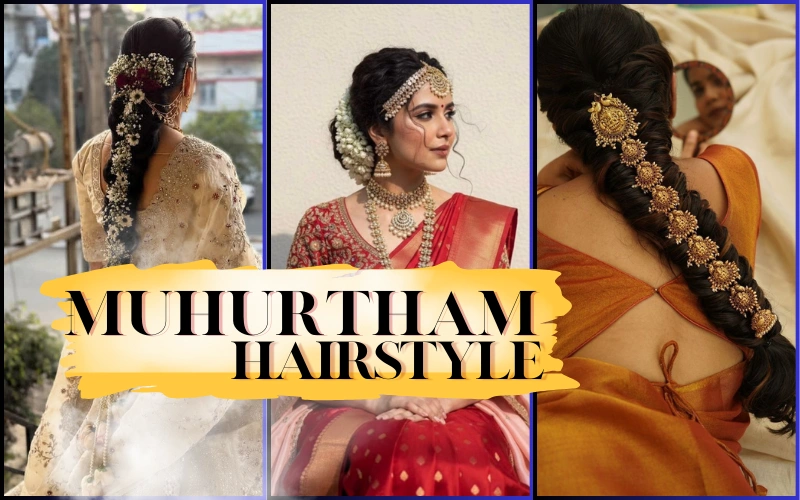
You’re sitting in front of the mirror on your wedding morning, your lehenga gleaming under the soft lights, your makeup flawless, and then comes the moment—the hairstylist begins crafting your muhurtham hairstyle. It’s not just hair; it’s the crown that completes your bridal avatar, the finishing touch that makes you feel like royalty.
Muhurtham Hairstyle Overview
| Aspect | Details |
|---|---|
| Average Styling Time | 45-90 minutes |
| Hair Length Required | Medium to long (12+ inches preferred) |
| Popular Styles | Traditional bun, braided looks, semi-open styles |
| Price Range | ₹3,000 – ₹15,000 (varies by city & stylist) |
| Best Season | All seasons (with appropriate products) |
| Longevity | 8-12 hours with proper setting |
| Regional Variations | Tamil, Telugu, Kannada, Malayalam styles |
| Essential Accessories | Jasmine flowers, jada billalu, maang tikka, veni |
What Exactly Is a Muhurtham Hairstyle?
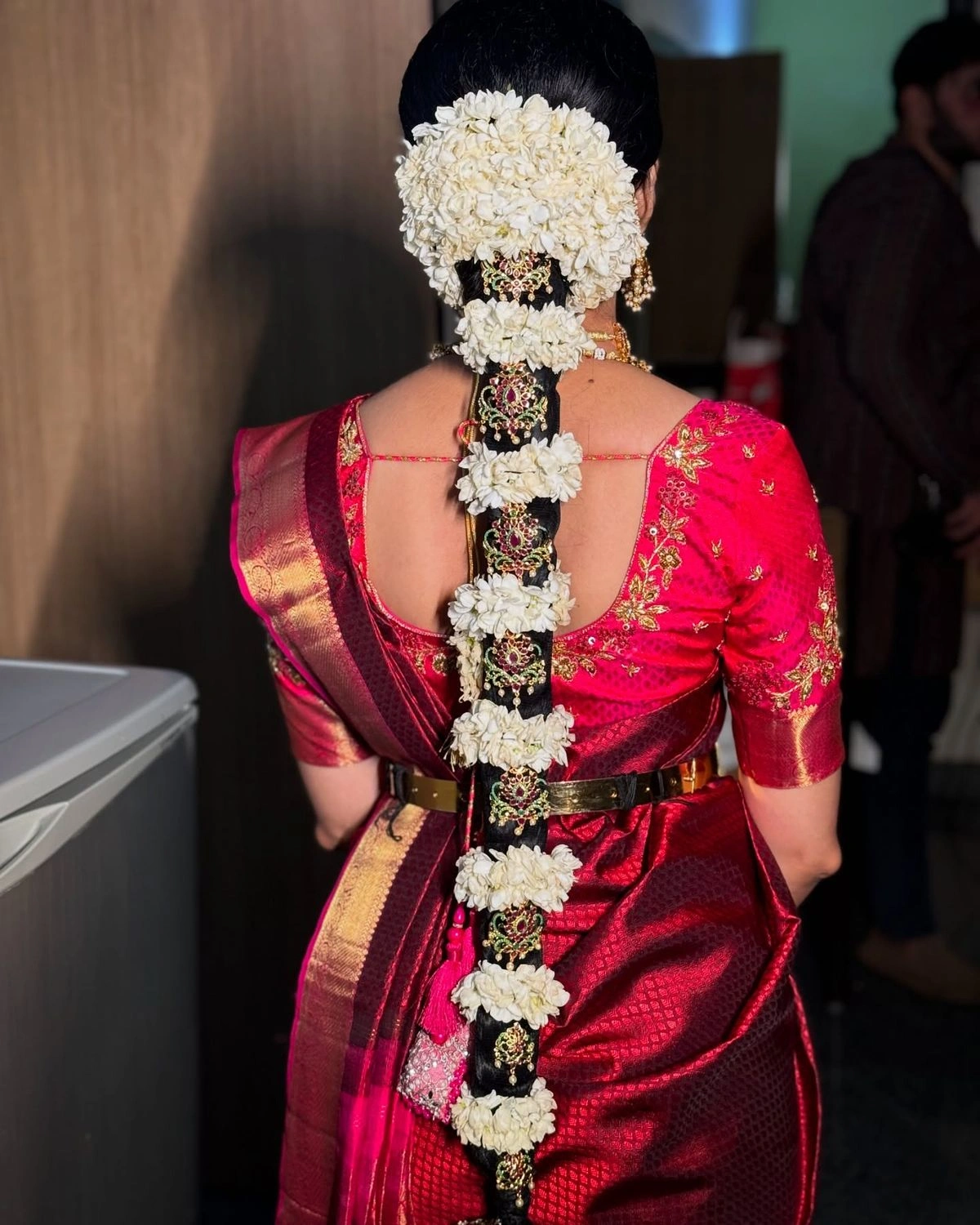
Unlike Western bridal hairdos that often feature loose waves or romantic updos, the muhurtham hairstyle for bride typically emphasizes structure, elegance, and the incorporation of traditional elements like fresh flowers, especially jasmine (mogra), gold ornaments, and elaborate hair accessories. It’s not just about looking pretty; it’s about honoring centuries of cultural heritage while still expressing your personal style.
The Cultural Significance Nobody Tells You About
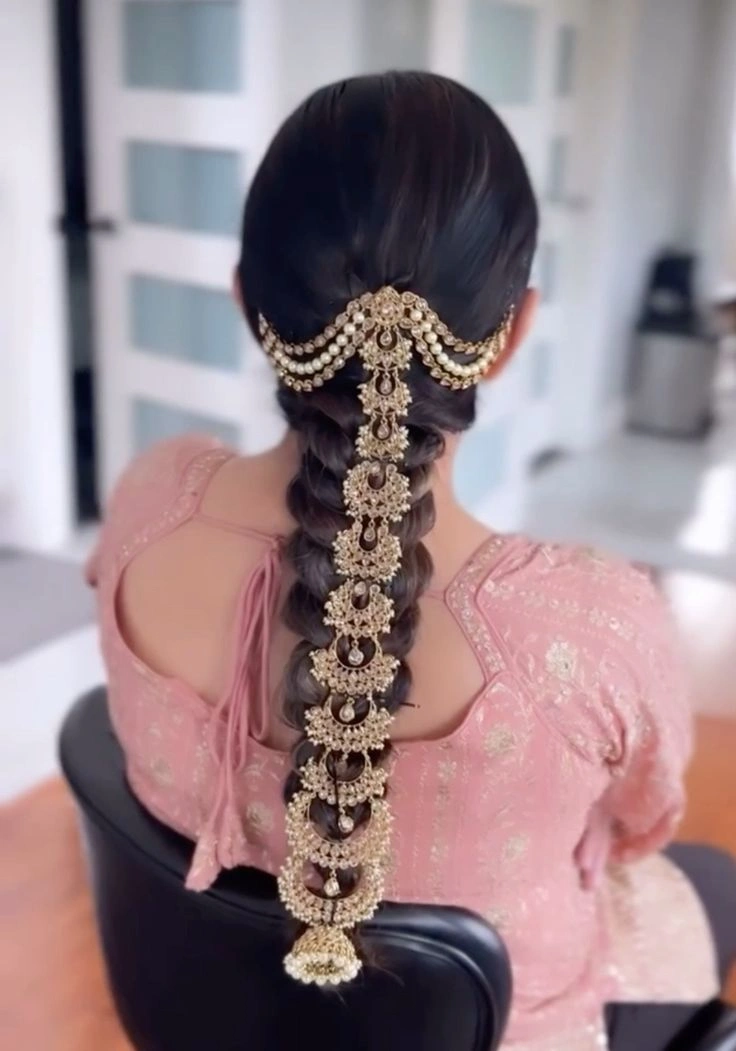
Here’s something fascinating: In South Indian tradition, a woman’s hair is considered her pride and crowning glory. The way you style it on your wedding day isn’t just an aesthetic choice—it’s believed to invoke blessings, represent your family’s values, and even influence the prosperity of your married life. Heavy? Maybe. Beautiful? Absolutely!
The Anatomy of a Perfect Muhurtham Hairstyle: Front to Back
The Front View: Your First Impression
The muhurtham hairstyle front is what people see first when you walk down the aisle (or around the sacred fire). It needs to be absolutely flawless because, let’s face it, about 60% of your wedding photos will be front-facing!
Key Elements of the Front:
- The Parting: Traditionally, a center parting is most common, symbolizing balance and harmony. It’s usually highlighted with sindoor (vermillion) and sometimes a decorative maang tikka chain.
- Face-Framing Sections: Soft tendrils or neatly pinned sections that complement your face shape. Round face? Opt for slightly puffed sides. Long face? Keep it sleek.
- Forehead Accessories: Your maang tikka, nethichutti (the ornament that sits on your forehead), or even small floral accents can be incorporated into the front styling.
- The Puff Factor: A slight teasing at the crown adds height and balances your overall look, especially if you’re wearing a heavy saree.
The Back View: Where the Magic Happens
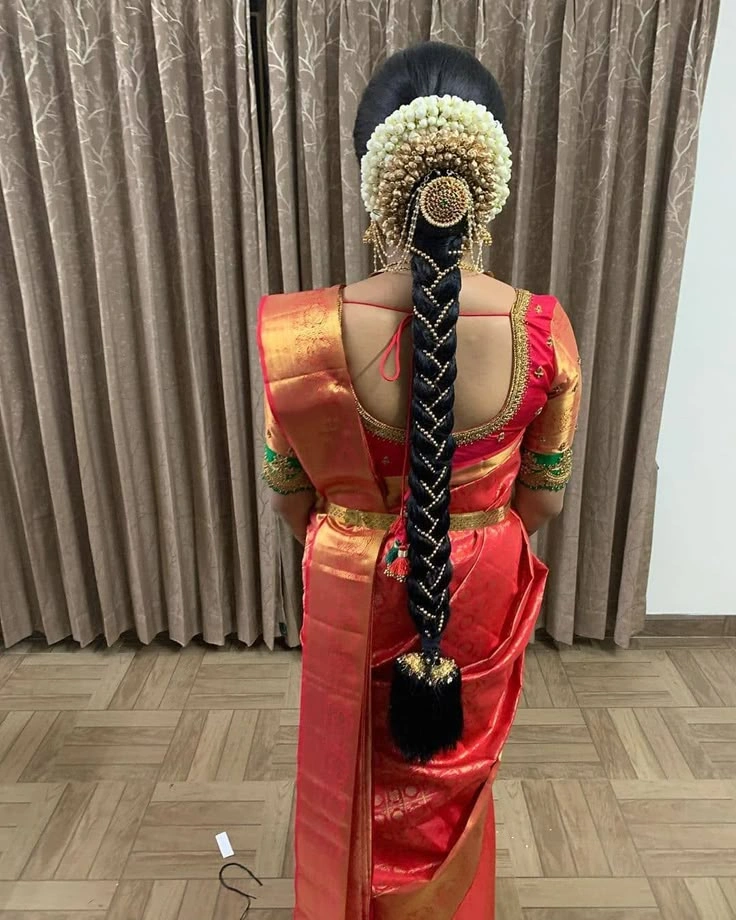
Now, this is where things get interesting! The muhurtham hairstyle back is your canvas for creativity and traditional opulence. Since South Indian wedding photography includes plenty of back shots (during rituals, while walking, etc.), this is your moment to shine—literally, with all those flowers and gold ornaments!
Popular Back Styles:
- Traditional Bun (Kondai): The classic choice! A large, neat bun positioned at the nape of the neck or slightly higher, decorated with a circular arrangement of jasmine flowers (gajra) and sometimes a decorative bun cover (jada billalu).
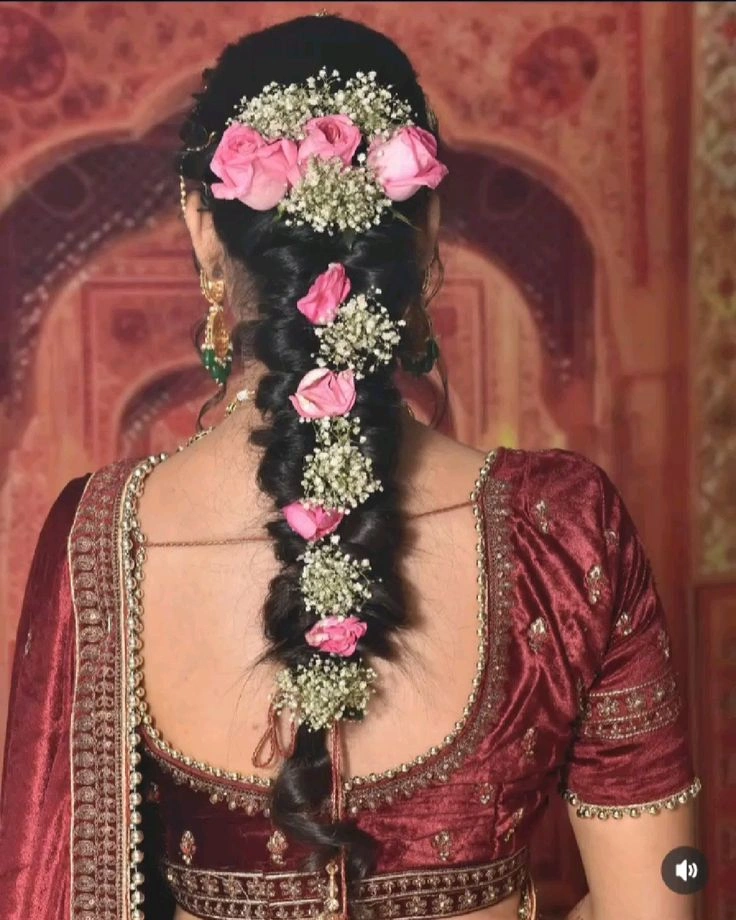
- Braided Beauty: A thick, long braid starting from the crown and running down the back, interwoven with flowers, gold ribbons, or ornamental chains. This is the go-to for brides with long, healthy hair.
- Twisted Elegance: Multiple twisted sections coming together into a low bun or left loose with decorative pins—perfect for the bride who wants traditional with a modern twist.
- The Veni Style: A South Indian specialty where the braid is adorned with a decorative band (veni) studded with traditional motifs, often in gold or antique finish.
15+ Stunning Muhurtham Hairstyle Ideas
1. The Classic Tamil Bride Look
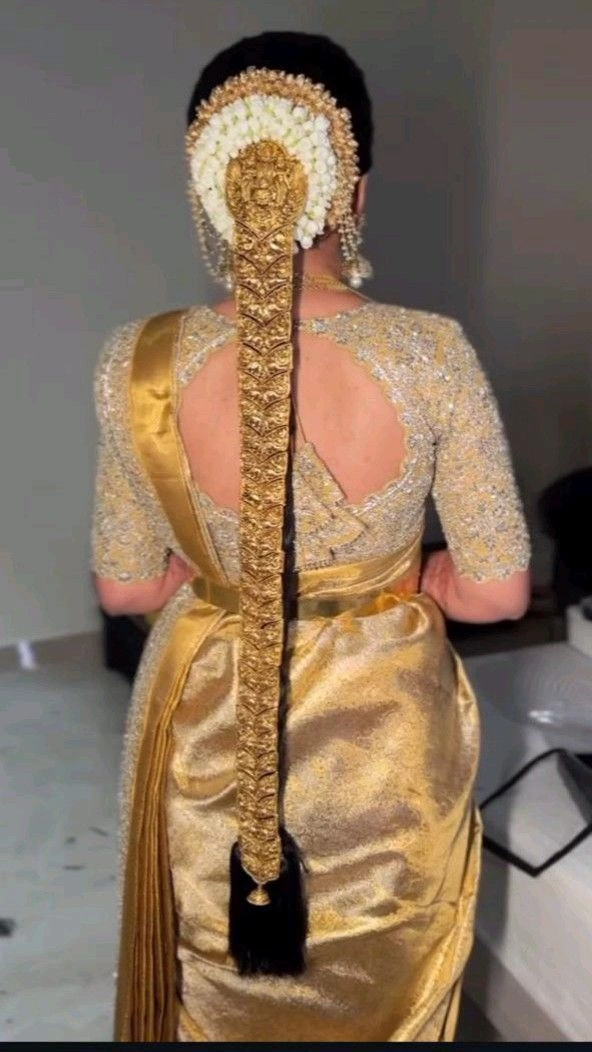
Think full, round bun adorned with concentric circles of jasmine, a neat center parting, and subtle puff at the crown. This traditional muhurtham hairstyle back has been gracing South Indian weddings for generations and continues to be a favorite for good reason—it’s timeless, elegant, and photographs beautifully from every angle.
Best for: Brides with medium to thick hair, traditional ceremonies
2. The Telugu Elegance
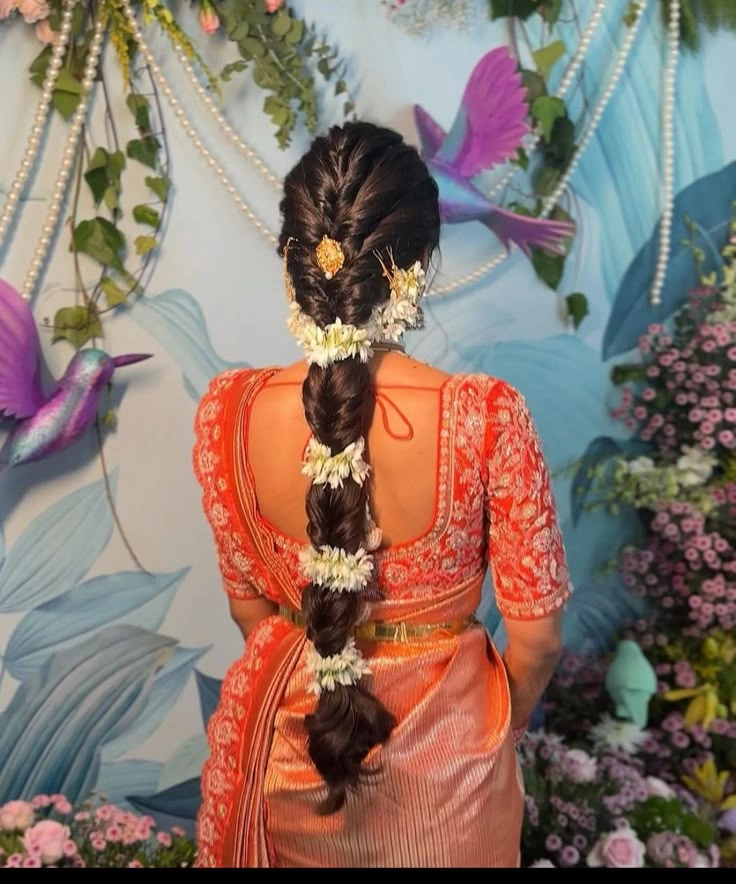
Characterized by a slightly looser, more voluminous bun positioned lower on the neck, often decorated with mogra flowers and ornate hair accessories. The front typically features more elaborate decoration with nethichutti and side accessories.
Best for: Brides who want a softer, more romantic traditional look
3. The Kannada Grandeur
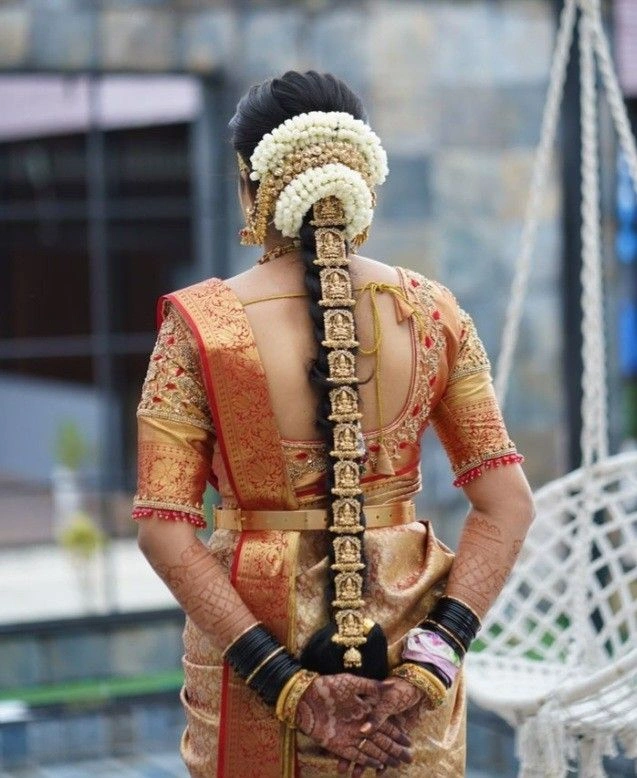
This style often incorporates a high bun with elaborate gold ornaments, including the distinctive “tahara” or “chandra” (moon-shaped ornament). The hair is usually styled with more height and drama.
Best for: Brides who love statement jewelry and aren’t afraid of volume
4. The Kerala Simplicity

True to Kerala’s aesthetic philosophy, this style is comparatively simpler—often a sleek low bun with a single gajra and minimal ornaments. The focus is on natural beauty and understated elegance.
Best for: Minimalist brides, morning ceremonies
5. The Modern Fusion
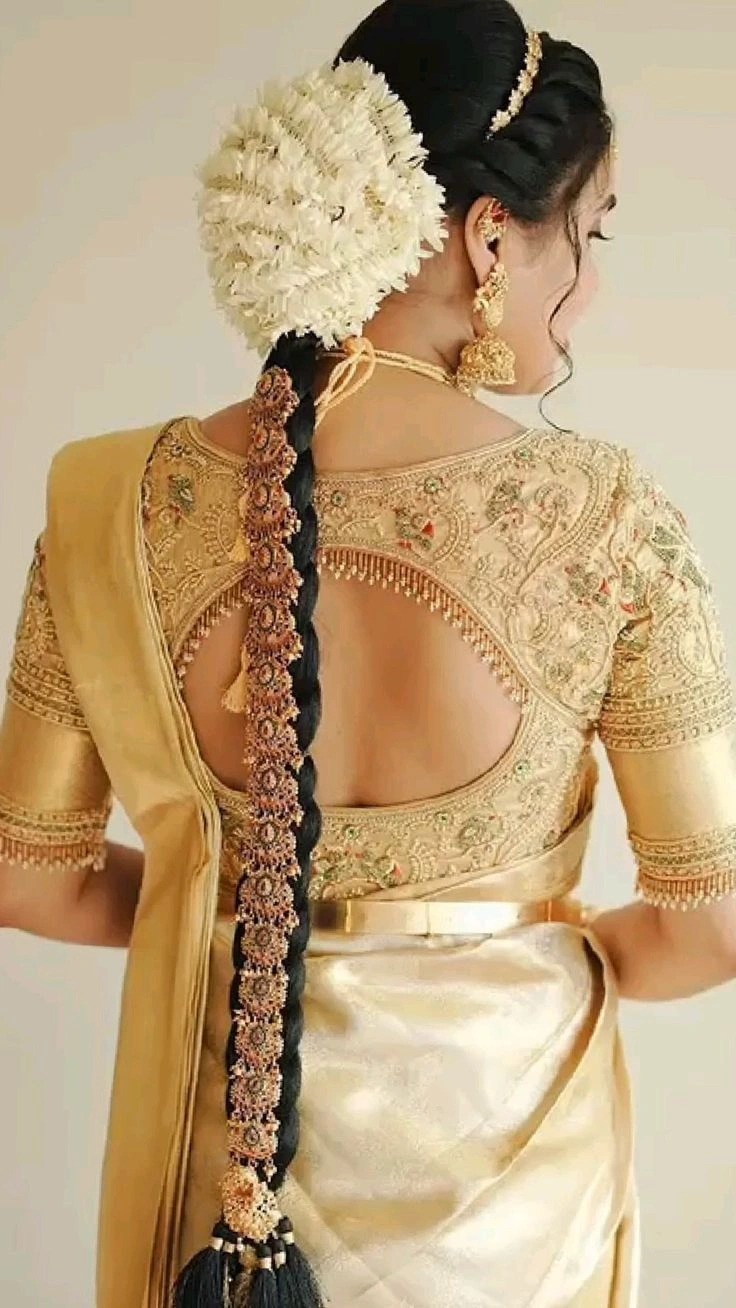
A contemporary take on tradition—think braided crown meeting traditional bun, or half-up half-down styles with flowers and modern hair accessories. This simple muhurtham hairstyle appeals to brides who want to honor tradition without going full traditional.
Best for: Fusion weddings, reception ceremonies, modern brides
6. The Flower-Loaded Extravaganza
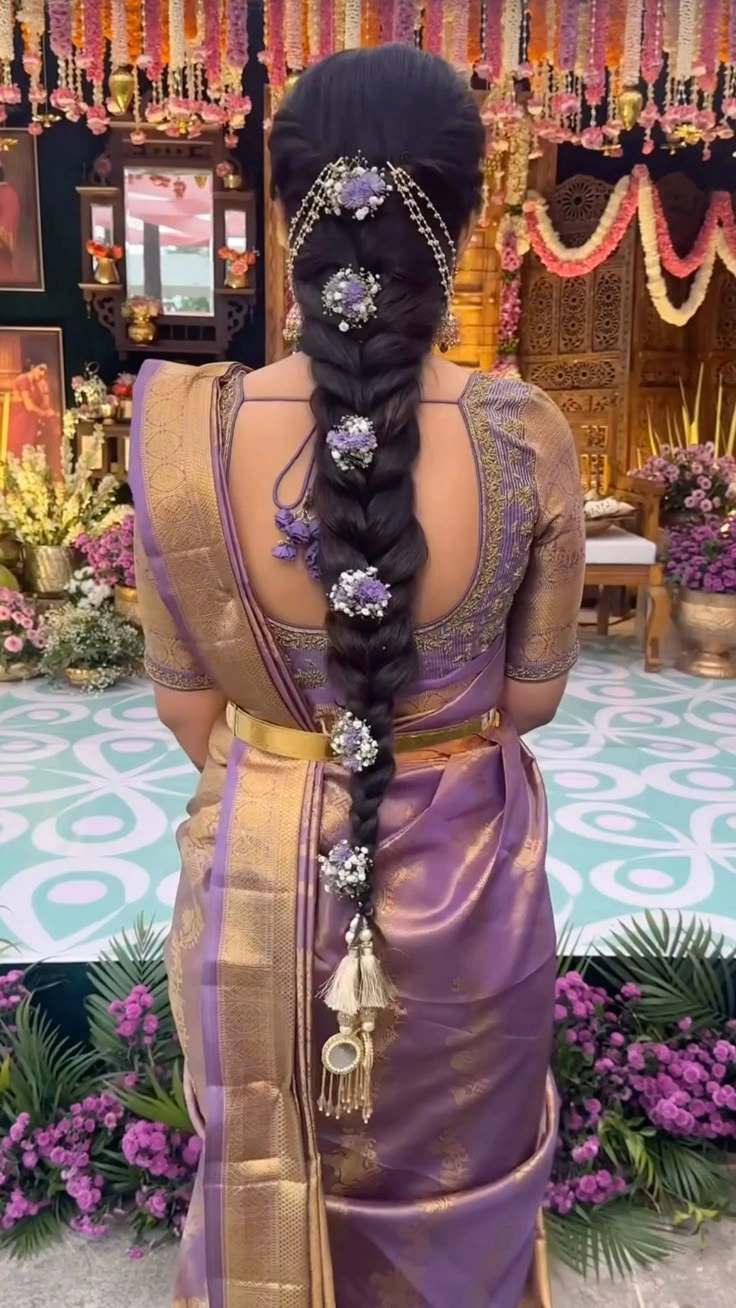
For brides who believe more is more! This style incorporates jasmine flowers not just on the bun or braid but throughout the hairstyle—on the sides, at the crown, creating a cascading floral effect.
Best for: Grand temple weddings, brides with thick, long hair
7. The Braided Crown with Bun Combo
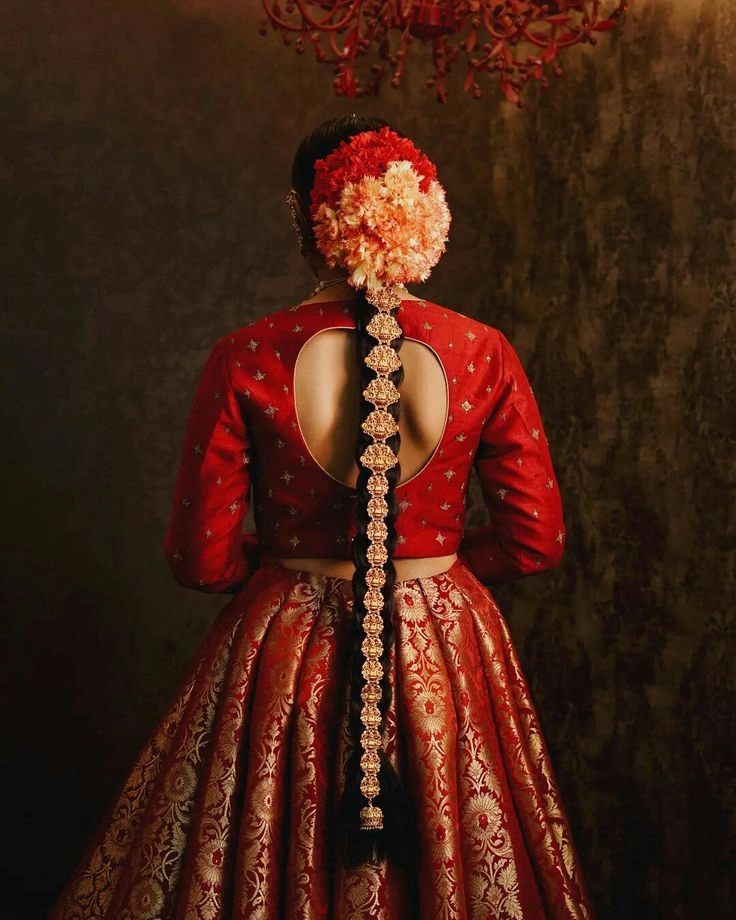
A Dutch or French braid that starts from one side of the head, wraps around like a crown, and ends in a traditional bun at the back. The muhurtham hairstyle front and back creates a stunning 360-degree look.
Best for: Brides who want complexity and visual interest
8. The Low Twisted Bun
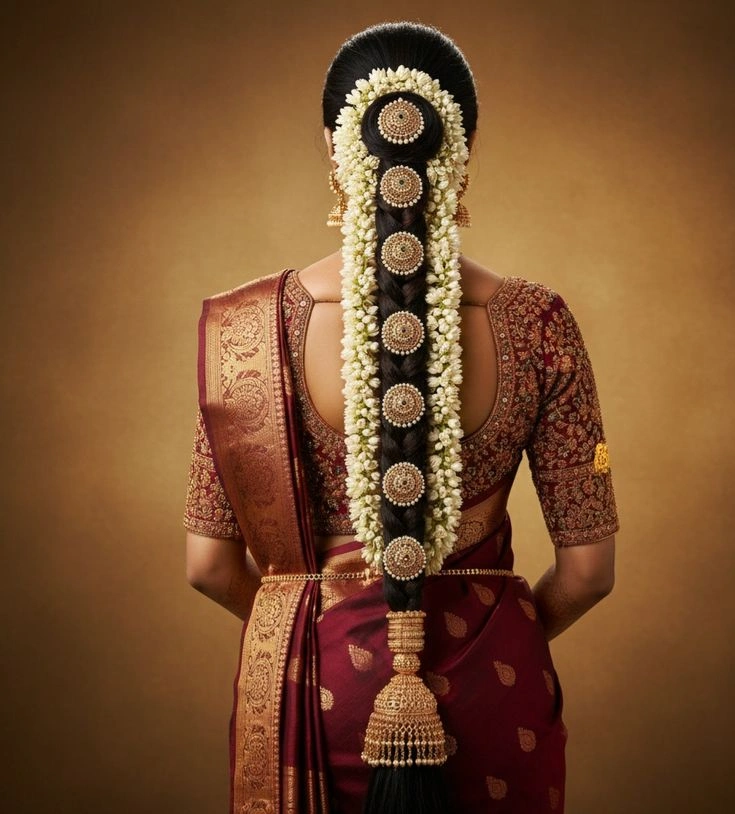
Multiple twisted sections of hair come together to form a low, textured bun. It’s secured with traditional pins and decorated with selective flower placement—elegant without being overwhelming.
Best for: Thin to medium hair, outdoor weddings
9. The Pulled-Back Sleekness

Hair is pulled back tightly from the face into a high, rounded bun. This style showcases your facial features and jewelry beautifully. It’s the traditional muhurtham hairstyle front that works exceptionally well with heavy kanjeevaram sarees.
Best for: Brides with good facial symmetry, elaborate jewelry
10. The Side-Swept Bun

A deviation from the classic center-aligned bun, this style features the bun positioned slightly to one side, creating an asymmetrical yet balanced look. Flowers cascade from the bun down one shoulder.
Best for: Beach weddings, destination weddings, contemporary brides
11. The Braided Bun Fusion
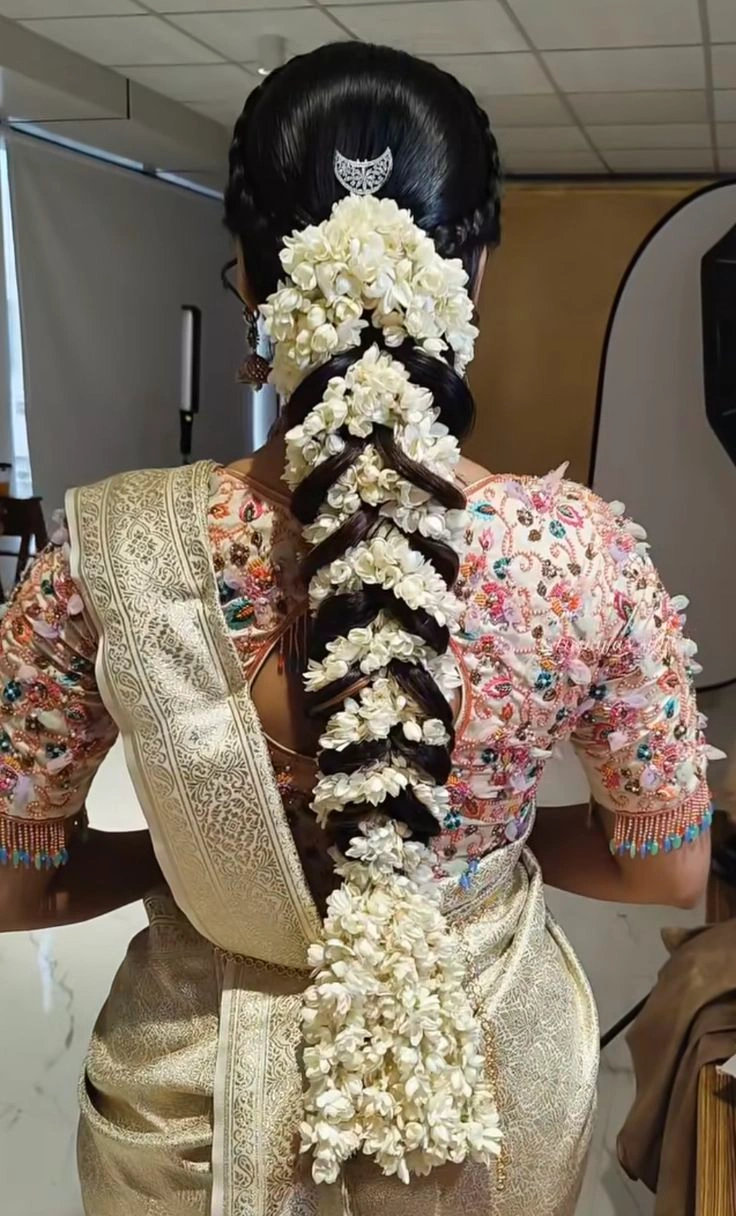
Multiple braids (usually 3-5) come together to form a complex, textured bun. Each braid can be decorated individually with small flowers or left plain for a more modern aesthetic.
Best for: Brides with very long hair, artistic personalities
12. The Rope Braid Style

Instead of traditional three-strand braiding, this uses the rope braid technique (twisting two sections around each other) for a different texture and appearance. Decorated with jasmine or left simple.
Best for: Thin hair (creates the illusion of thickness), boho brides
13. The Fishtail-Inspired Traditional Look

A fishtail braid technique adapted to traditional aesthetics, often decorated with gold ribbons and flowers. This south indian muhurtham hairstyle brings international braiding techniques to classical styling.
Best for: Young brides, pre-wedding ceremonies
14. The Curled and Pinned Elegance

For brides with naturally curly hair, this style embraces your texture! Curls are pinned back in sections to create a voluminous, textured updo, decorated with strategic flower placement.
Best for: Naturally curly or wavy hair, outdoor ceremonies
15. The Semi-Open Flow
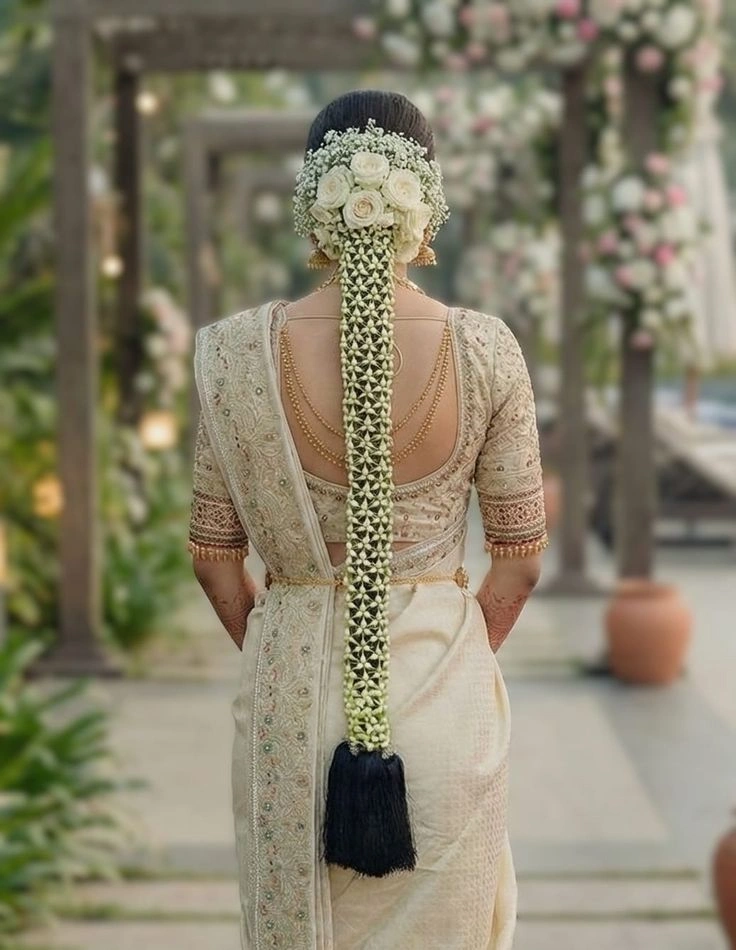
Not quite traditional, but increasingly popular—the top half is secured while the bottom half flows freely, decorated with flowers. It’s less common for the main ceremony but perfect for pre-wedding functions.
Best for: Mehendi, Sangeet, young brides
16. The Temple Ceremony Special
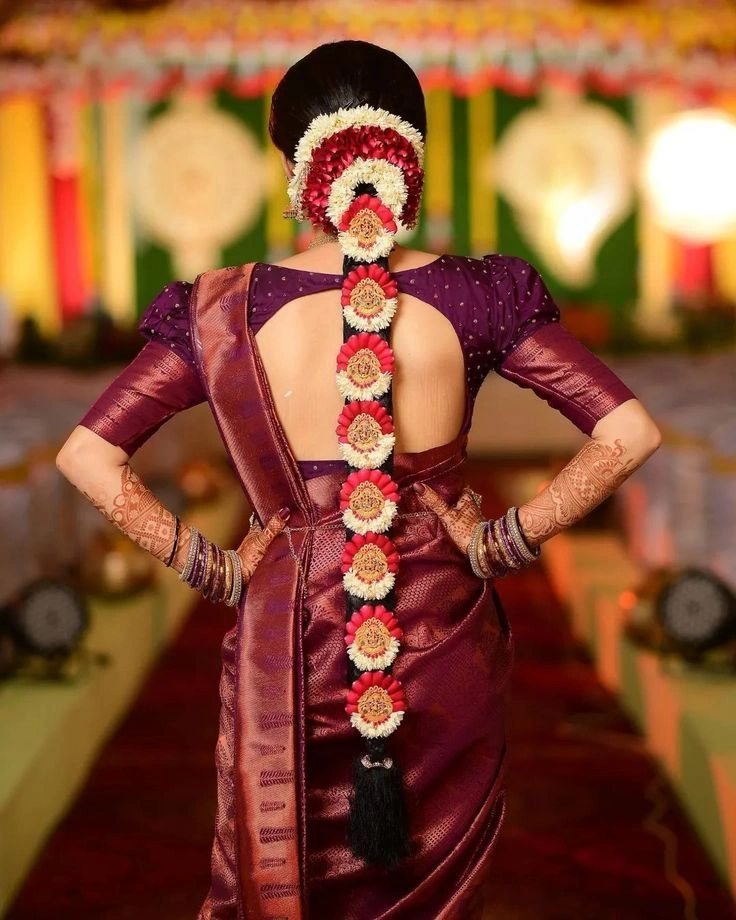
Extremely traditional—hair parted in the center, pulled back tightly, formed into a firm bun at the nape, heavily decorated with jasmine in the traditional pattern. This follows the strictest interpretation of bridal hair styling.
Hair Type Matters: Finding Your Perfect Match
Here’s a truth bomb: not every muhurtham hairstyle works for every hair type. Let’s break it down:
For Thin Hair
Challenge: Achieving volume and making the bun look full
Solutions:
- Use clip-in hair extensions or a bun donut for added volume
- Opt for twisted or braided styles that create the illusion of thickness
- Tease the crown for height
- Choose hairstyles with more intricate patterns (complexity distracts from volume)
Best Styles: Low twisted bun, rope braid style, fishtail-inspired look
For Thick Hair
Challenge: Managing the weight and bulk, ensuring comfort throughout the long ceremony
Solutions:
- Definitely go for elaborate styles—your hair can handle it!
- Use strong hold products and sturdy pins
- Consider dividing hair into sections for easier management
- Don’t shy away from heavy flower decoration
Best Styles: Classic Tamil bride look, flower-loaded extravaganza, braided bun fusion
For Curly or Wavy Hair
Challenge: Achieving the sleek look often associated with traditional styles
Solutions:
- Decide early: embrace your texture or straighten it (both work beautifully!)
- If embracing curls, use curl-defining products
- If straightening, do it professionally 2-3 days before for best results
- Consider styles that work WITH your texture
Best Styles: Curled and pinned elegance, modern fusion, semi-open flow
For Short Hair
Challenge: Limited length for traditional styles
Solutions:
- Hair extensions are your best friend!
- Focus on front styling and accessories
- Consider ornate decorative bun covers
- Embrace contemporary interpretations
The Essential Products and Accessories Checklist
You can’t build a palace without bricks, right? Same goes for your muhurtham hairstyle for bride. Here’s what you need:
Hair Products
- Volumizing Mousse: For that crucial lift at the roots
- Strong-Hold Hairspray: Your style needs to survive 8+ hours!
- Smoothing Serum: To tame flyaways and add shine
- Texturizing Spray: For grip and hold in updos
- Dry Shampoo: For oil control throughout the day
Product Recommendation: According to hair care expert Dr. Priya Menon, “Invest in sulfate-free products in the weeks leading to your wedding. Healthy, strong hair holds styles better and photographs more beautifully.”
Traditional Accessories
- Jasmine Flowers (Mogra/Gajra): The MVP of any muhurtham hairstyle—fresh, fragrant, and photogenic
- Jada Billalu: Traditional hair jewels that add sparkle
- Veni (Hair Band): Decorative bands that adorn braids
- Maang Tikka: Forehead jewelry that completes the front look
- Nethichutti: The distinctive forehead ornament worn by South Indian brides
- Hair Pins (U-pins and Bobby Pins): The unsung heroes holding everything together
- Bun Covers: Decorative covers for the bun, often with traditional motifs
Modern Additions
- Hair Extensions: For added length and volume
- Bun Donuts: For that perfect round bun shape
- Decorative Hair Combs: Contemporary accessories that blend with traditional looks
- Gold Ribbons: For weaving through braids
Common Mistakes to Avoid (Learn from Others’ Mishaps!)
1. Skipping the Trial
Never, and I mean NEVER, trust a stylist you haven’t trialed with. Wedding day surprises are only good when they involve extra desserts, not experimental hairstyles.
2. Choosing Style Over Comfort
That elaborate bun might look stunning, but if it gives you a headache after hour two, you’ll spend your wedding day miserable. Always prioritize comfort.
3. Ignoring Your Face Shape
Not every muhurtham hairstyle front and back suits every face shape. Round faces need height, long faces need width, heart-shaped faces need balance at the jawline. Work WITH your features, not against them.
4. Using Fresh Flowers Without Proper Preparation
Jasmine flowers should be bought the night before, stored properly with moisture, and applied right before the ceremony. Old, brown flowers in your wedding photos? Not cute.
5. Overloading with Products
Yes, you need hold, but making your hair crunchy and stiff isn’t the goal. Your hairstyle should move naturally, not look like a helmet.
6. Forgetting About Weather
Outdoor wedding in summer? That elaborate bun might not survive the humidity. Plan for weather conditions and have a backup plan (or at least, extra bobby pins).
7. Not Communicating Clearly
“Make it traditional but modern” isn’t helpful. Be specific with your stylist about what you want. Show pictures, discuss details, and ensure you’re both on the same page.
Regional Variations: Celebrating Diversity
The beauty of south indian muhurtham hairstyle lies in its regional diversity. Let’s appreciate these differences:
Tamil Nadu Style
Characteristics:
- Prominent round bun (kondai)
- Heavy jasmine decoration in circular patterns
- Center parting with significant crown puff
- Traditional jewelry placement
Cultural Note: Tamil brides often wear the “rakkodi” (a tassel ornament) hanging from their bun, symbolizing prosperity.
Andhra Pradesh & Telangana Style
Characteristics:
- Slightly looser, more voluminous styling
- Ornate use of gold accessories
- “Tahara” (moon-shaped ornament) is common
- Sometimes incorporates small flowers beyond jasmine
Cultural Note: The Telugu bride’s hairstyle often includes the “gajulu” (glass bangles) not just on hands but sometimes hung decoratively in the hair as well.
Karnataka Style
Characteristics:
- High bun placement
- Dramatic volume and height
- Heavy use of traditional gold ornaments
- Elaborate maang tikka and nethichutti
Cultural Note: Kannada brides traditionally wear the “aralimara jade” (sacred tree-themed hair decoration), though modern brides often opt for simpler versions.
Kerala Style
Characteristics:
- Understated elegance
- Lower, simpler bun
- Minimal flowers (usually a single strand of jasmine)
- Focus on hair’s natural shine and health
Cultural Note: Kerala brides often wear fresh flowers from their family garden, adding a personal, meaningful touch to their hairstyle.
Budgeting for Your Bridal Hair
Let’s talk money, honey! Your traditional muhurtham hairstyle back comes with costs beyond just the stylist’s fees.
Typical Cost Breakdown
Metropolitan Cities (Mumbai, Bangalore, Chennai, Hyderabad):
- Professional Stylist: ₹8,000 – ₹15,000
- Fresh Flowers: ₹1,000 – ₹3,000
- Hair Accessories: ₹5,000 – ₹50,000 (highly variable based on gold content and quality)
- Hair Extensions (if needed): ₹3,000 – ₹10,000
- Trial Session: ₹2,000 – ₹5,000
Tier 2 Cities:
- Professional Stylist: ₹4,000 – ₹8,000
- Fresh Flowers: ₹500 – ₹1,500
- Hair Accessories: ₹3,000 – ₹30,000
- Hair Extensions: ₹2,000 – ₹7,000
- Trial Session: ₹1,000 – ₹3,000
Saving Tips:
- Book stylists who charge flat fees for complete bridal packages
- Borrow traditional hair jewelry from family (they’ll love being involved!)
- Buy flowers directly from markets rather than through stylists
- Consider renting hair extensions if you need them just once
Trending Now: Modern Takes on Traditional Styles
The world of muhurtham hairstyle front and back is evolving! Here are the hottest trends for 2026:
1. Minimalist Traditional
Less is more! Brides are opting for simpler versions of classic styles—smaller buns, fewer flowers, letting the natural beauty shine through.
2. Asymmetrical Elegance
Breaking away from perfect symmetry, modern brides are choosing off-center buns, side-swept elements, and uneven flower distribution for a more artistic look.
3. Metallic Accents
Gold chains, copper wire, rose gold accessories woven through braids and buns, adding modern glamour to traditional styles.
4. Eco-Conscious Choices
Brides are opting for organic flowers, reusable hair accessories, and styling products from sustainable brands.
5. The Instagram Influence
Multi-textured styles that photograph beautifully from every angle, specifically designed with social media in mind.
6. Cultural Fusion
Blending South Indian traditional elements with elements from other cultures—think jasmine with baby’s breath, traditional buns with Western hair accessories.
Conclusion:
Your muhurtham hairstyle is more than a bridal look—it’s a reflection of your roots, your personality, and your joy. Whether you choose a timeless South Indian style or a modern twist, the right hairstyle is the one that makes you feel confident, comfortable, and truly you.
Focus on what complements your face, attire, and traditions—not perfection. Trust your stylist, stay present, and enjoy every sacred moment. After all, this hairstyle isn’t just for the wedding—it’s for the memories you’ll carry forever.
Read More: Chapri Hairstyle, Shubman Gill Hairstyle, Virat Kohli Hairstyle,Paranda Hairstyle
Frequently Asked Questions
1. What is the best muhurtham hairstyle for a bride?
Traditional braids or low buns are considered the best muhurtham hairstyles as they stay intact for long rituals and align with cultural customs.
2. Can I choose a simple muhurtham hairstyle?
Yes. A simple muhurtham hairstyle with a neat bun or braid and minimal flowers is elegant, practical, and perfectly acceptable.
3. Is it important to style both the front and back of the hair?
Absolutely. Muhurtham ceremonies involve guests and photographers viewing the bride from all angles, so a well-finished muhurtham hairstyle front and back is essential.
4. Which hairstyle suits a South Indian muhurtham best?
A south indian muhurtham hairstyle featuring a long braid (jadai), jasmine flowers, and traditional hair jewelry is the most preferred and culturally significant.
5. Can brides with short or thin hair manage a traditional muhurtham hairstyle?
Yes. Hair extensions, padding, and professional styling techniques make it easy to achieve a traditional muhurtham hairstyle even with short or thin hair.
6. How long does a muhurtham hairstyle usually last?
With proper preparation and professional styling, a muhurtham hairstyle can last anywhere between 6 to 8 hours without major touch-ups.
7. Should I do a hairstyle trial before the wedding?
Definitely. A trial helps you check comfort, durability, and how well the hairstyle complements your face, saree, and jewelry.
Explore More Blogs at Thestylemyhair
