
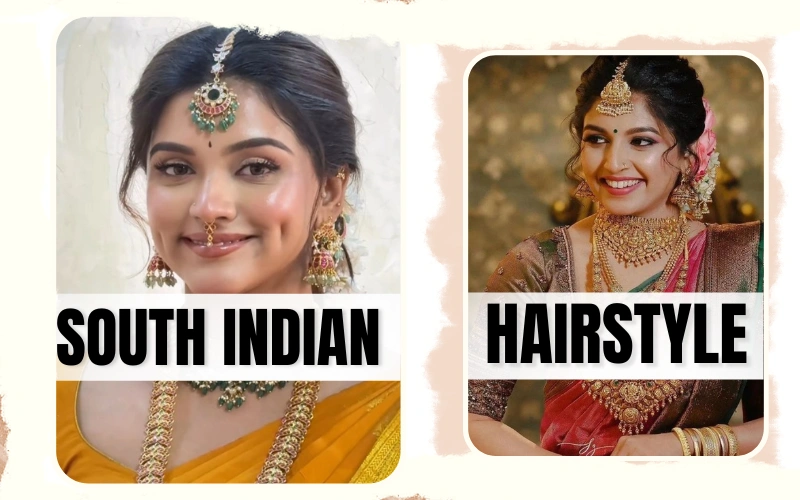
Let’s be honest—when you think of jaw-dropping, head-turning hairstyles that make you stop mid-scroll on Instagram, south indian hairstyle options probably top that list. There’s something utterly captivating about the way South Indian women have perfected the art of hair styling over centuries, blending tradition with contemporary flair in ways that make the rest of us wonder, “How on earth do they do that?”
Understanding the Rich Heritage of South Indian Hairstyles
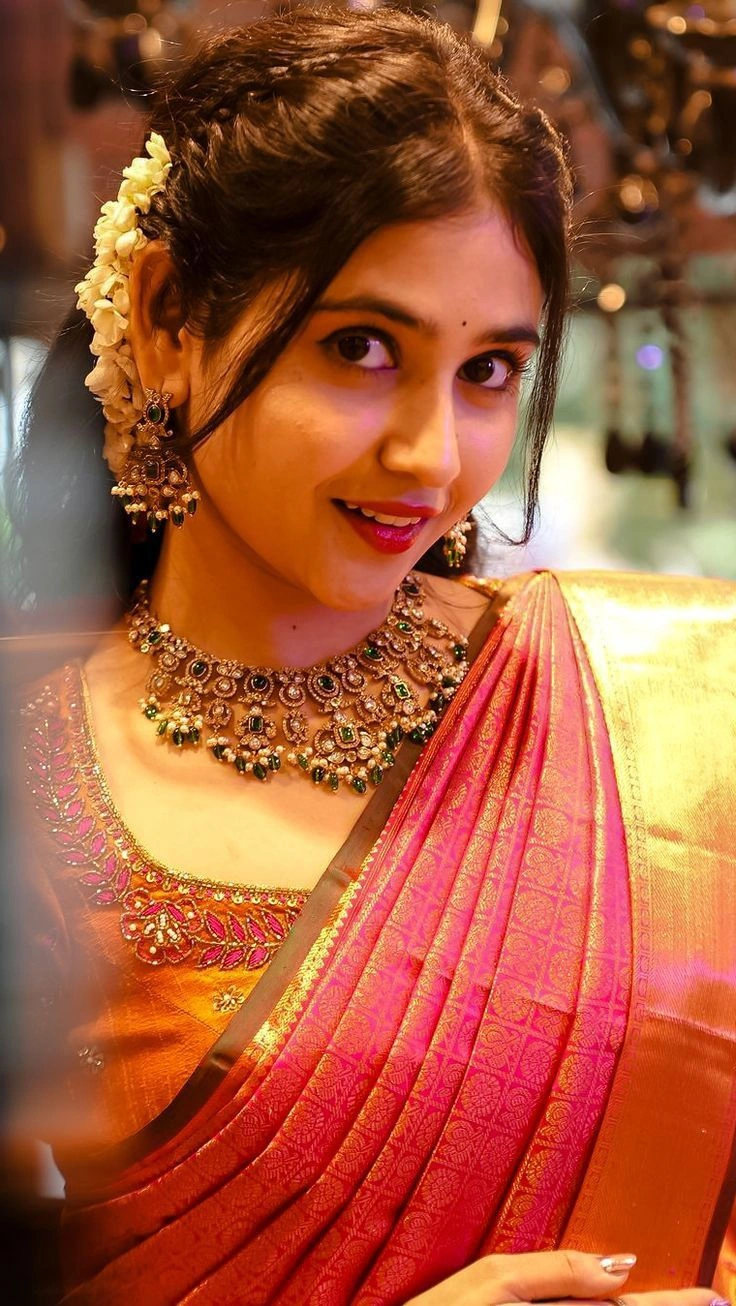 Before we dive into specific styles, let’s talk about why south indian hairstyle traditions deserve all the appreciation they get. These aren’t just random ways to tie up your hair—they’re cultural artifacts with stories to tell.
Walk into any ancient South Indian temple, and you’ll notice something fascinating: the sculptures of goddesses and celestial dancers (apsaras) sport incredibly detailed hairstyles. The Chola dynasty artisans from the 10th century CE meticulously carved these styles into bronze and stone, preserving them for eternity. That’s right—these hairstyles have literally stood the test of time, quite literally set in stone!
The Iconic Jasmine Bun: Queen of All South Indian Hairstyles
If there’s one style that screams “South Indian elegance,” it’s the jasmine bun. This isn’t just a hairstyle—it’s practically a cultural institution. The combination of neatly coiled hair adorned with fresh jasmine flowers (known as gajra or malligai poo) creates an aesthetic that’s both sophisticated and aromatic.
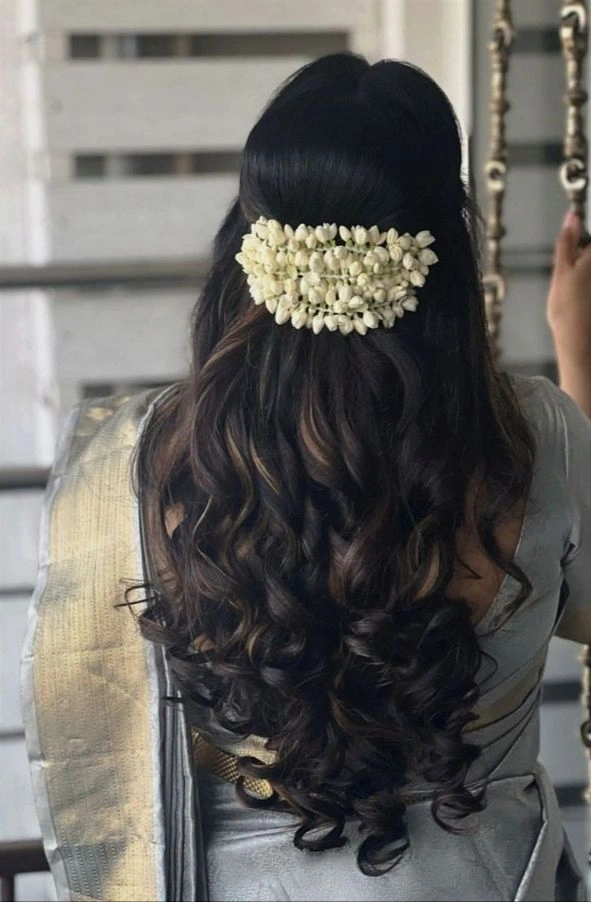
How to Create the Perfect Jasmine Bun
Creating this classic look is easier than you think, though it does require some practice:
- Start with clean, slightly damp hair – This gives you better control and hold
- Apply coconut oil generously – Not only does this add shine, but it’s also traditional and keeps hair healthy
- Create a high or low ponytail – Depending on your preference and face shape
- Twist the ponytail tightly – This is crucial for that sleek, polished look
- Coil it around the base – Form your bun by wrapping the twisted hair around the ponytail base
- Secure with bobby pins – Use plenty—we’re talking 10-15 pins for a secure hold
- Wrap your jasmine gajra – Start from the bun’s base and spiral upward
The jasmine bun works beautifully for weddings, classical dance performances, and festivals. Bharatanatyam dancers, in particular, have perfected this style, often adding decorative elements like jada billalu (bun pins) for extra glamour.
The Elegant Temple Braid: Braiding with a Divine Touch
The temple braid, also called koti pakka jadai, is another show-stopping south indian hairstyle that’s been gracing South Indian women for generations. Named after its resemblance to the architectural patterns found in temple pillars, this style is all about intricate weaving and attention to detail.
Mastering the Temple Braid Technique
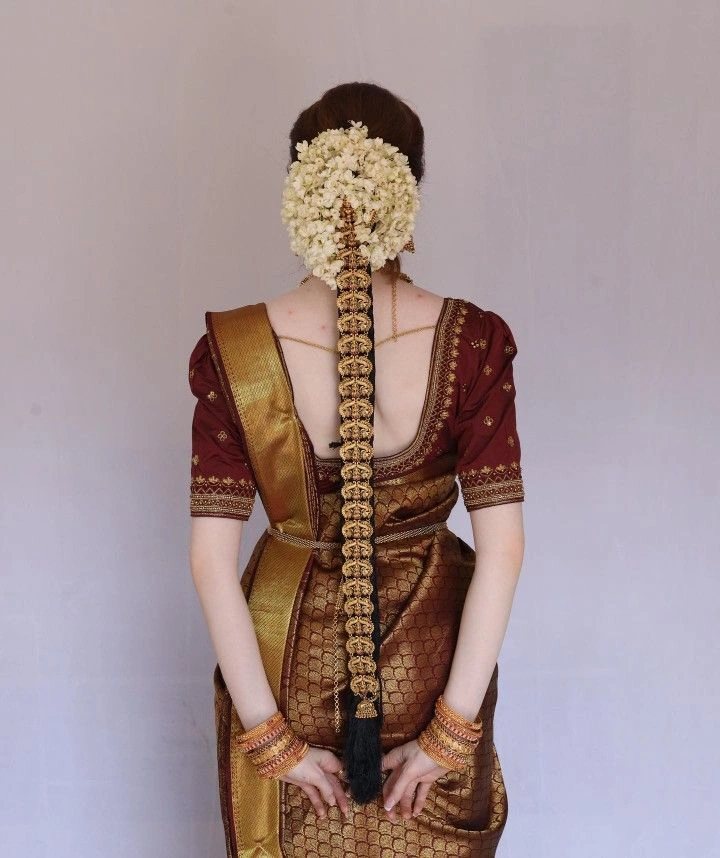
Unlike your standard three-strand braid, the temple braid involves:
- Creating multiple sections – Usually 4-5 strands instead of the traditional 3
- Incorporating hair gradually – Similar to a French braid but more complex
- Adding decorative elements – Ribbons, flowers, or traditional jadai nagam (braid ornaments)
- Securing with traditional pins – Often made of brass or silver in traditional settings
What makes this style particularly special is how it elongates the neck and draws attention to traditional jewelry like jhumkas (earrings) and necklaces. Classical dancers love this style because it stays put during vigorous performances while looking absolutely stunning under stage lights.
The Traditional Plait with Flowers: Simplicity Meets Elegance
Sometimes, the most beautiful south indian hairstyle options are the simplest ones. The traditional long plait adorned with flowers is proof that you don’t need complexity to create impact.
This style involves creating a single, thick braid that runs down the back, decorated with flowers woven throughout its length. It’s the go-to style for many South Indian women during festivals, religious ceremonies, and even casual outings.
Why the Traditional Plait Never Goes Out of Style
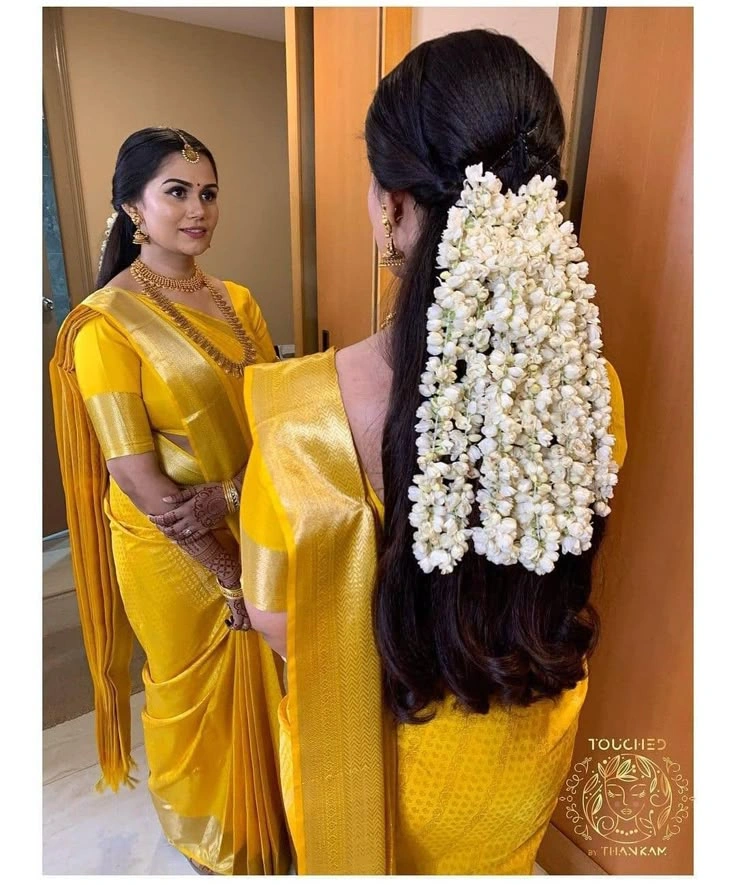
There are several reasons this centuries-old style remains beloved:
Practicality – It keeps long hair manageable in hot, humid climates Versatility – Works for any occasion from casual to formal Health benefits – Reduces hair breakage compared to loose hair Cultural connection – Maintains a visible link to traditional practices Low maintenance – Can last all day with minimal touch-ups
In Kerala, this style is particularly popular during Onam celebrations, with women weaving kasavu (golden) threads through their braids for added festivity. In Tamil Nadu, it’s common during Pongal, often decorated with turmeric flowers and marigolds.
The Majestic Kondai: The Royal South Indian Bun
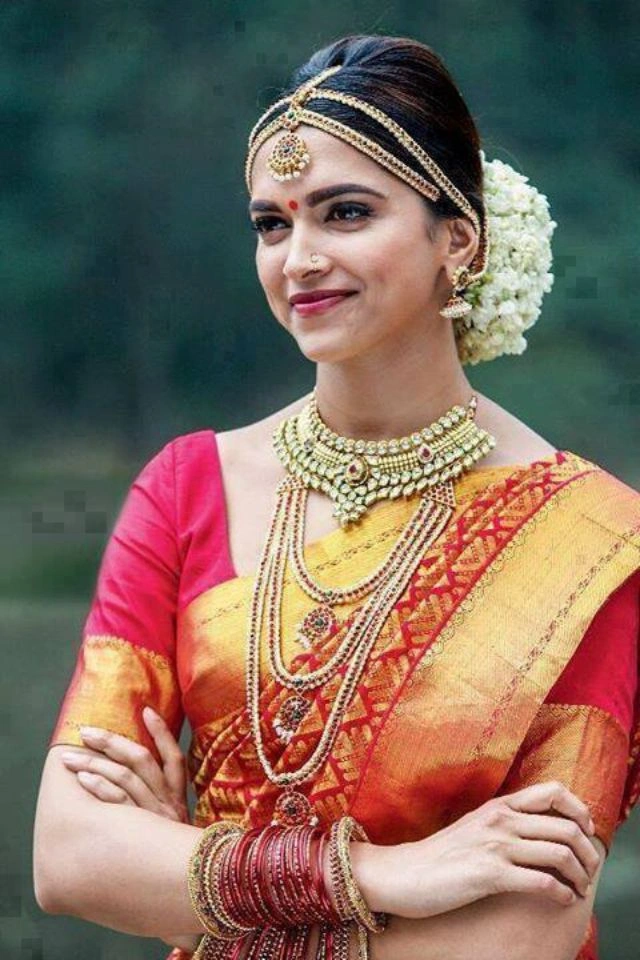
The kondai (meaning bun in Tamil) is royalty in hair form. Unlike the jasmine bun, which is relatively compact, the kondai is a larger, more elaborate bun style that often sits at the crown or back of the head.
Different Types of Kondai Styles
South Indian tradition recognizes several kondai variations:
Jadai Kondai – Incorporates the braid into a large, circular bun Veni Kondai – Uses multiple braids wound together Poolajadai – A flower-heavy version covered almost entirely in blooms Rettai Jadai – Twin buns on either side of the head (popular in rural areas)
Modern South Indian Hairstyle Fusion: Best of Both Worlds
Here’s where things get really exciting! Contemporary hairstylists and fashion-forward South Indian women are creating fusion styles that honor tradition while embracing modernity. These hybrid looks are everywhere on social media, wedding receptions, and even international runways.
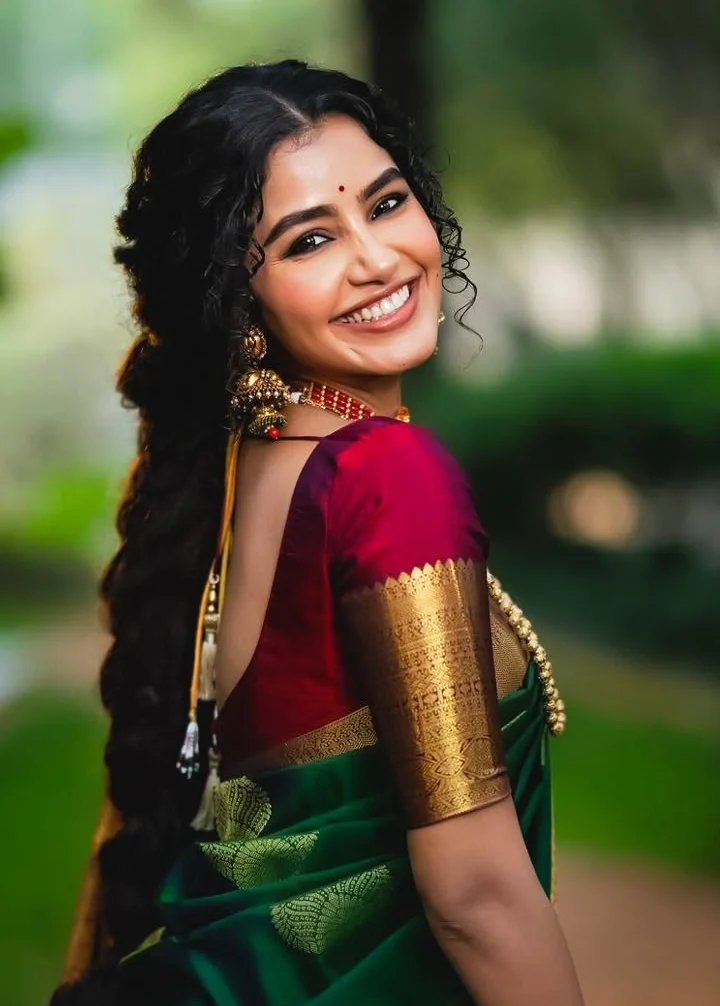
Popular Fusion Styles Taking Over
The Messy Bun with Gajra – A deliberately tousled bun wrapped with jasmine, combining casual chic with tradition
Braided Crown with Loose Waves – Temple braiding techniques applied to create a crown, with the rest of the hair flowing naturally
Half-Up Kondai – The top half styled in traditional kondai while the bottom remains loose and curled
French Braid meets Temple Braid – Western braiding techniques decorated with South Indian flowers and accessories
Top Knot with Jada Nagam – A modern top knot adorned with traditional bun jewelry
These styles are particularly popular among South Indian brides who want their wedding look to reflect both their heritage and contemporary aesthetics. Many fashion designers now specifically request these fusion styles for runway shows, recognizing their universal appeal.
Hair Care Secrets from South Indian Tradition
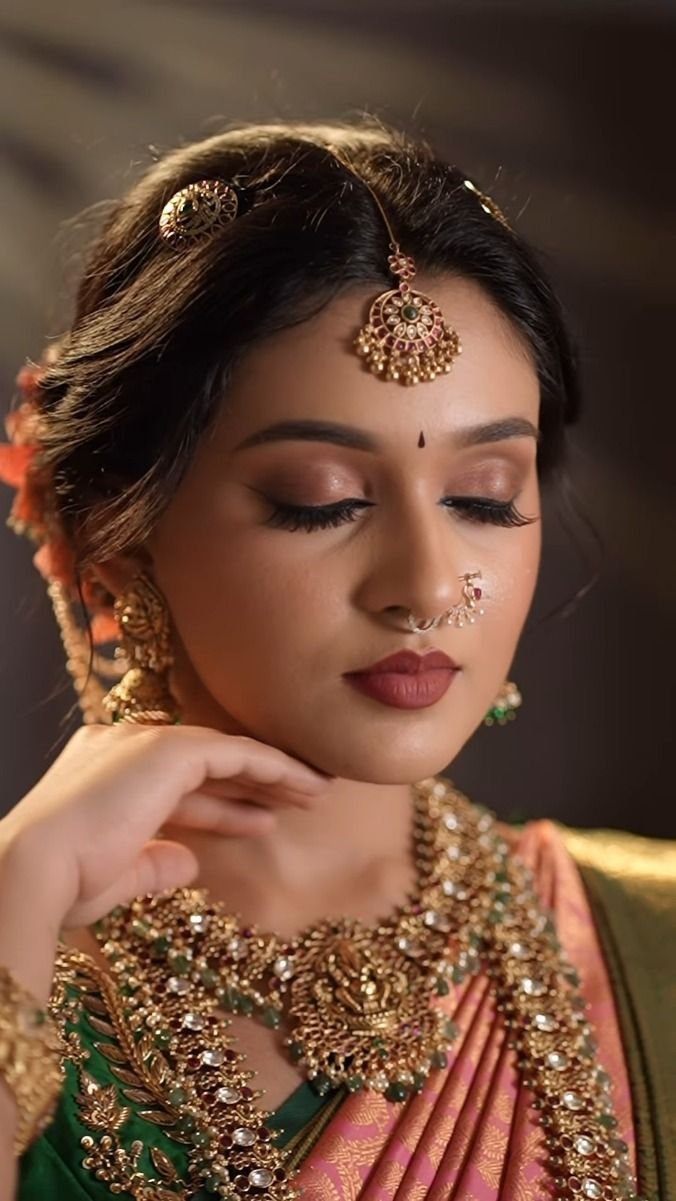
Creating beautiful hairstyles is only half the battle—maintaining healthy hair is equally important. South Indian women have perfected hair care routines over millennia, and science is now validating many of these traditional practices.
Weekly Hair Care Rituals
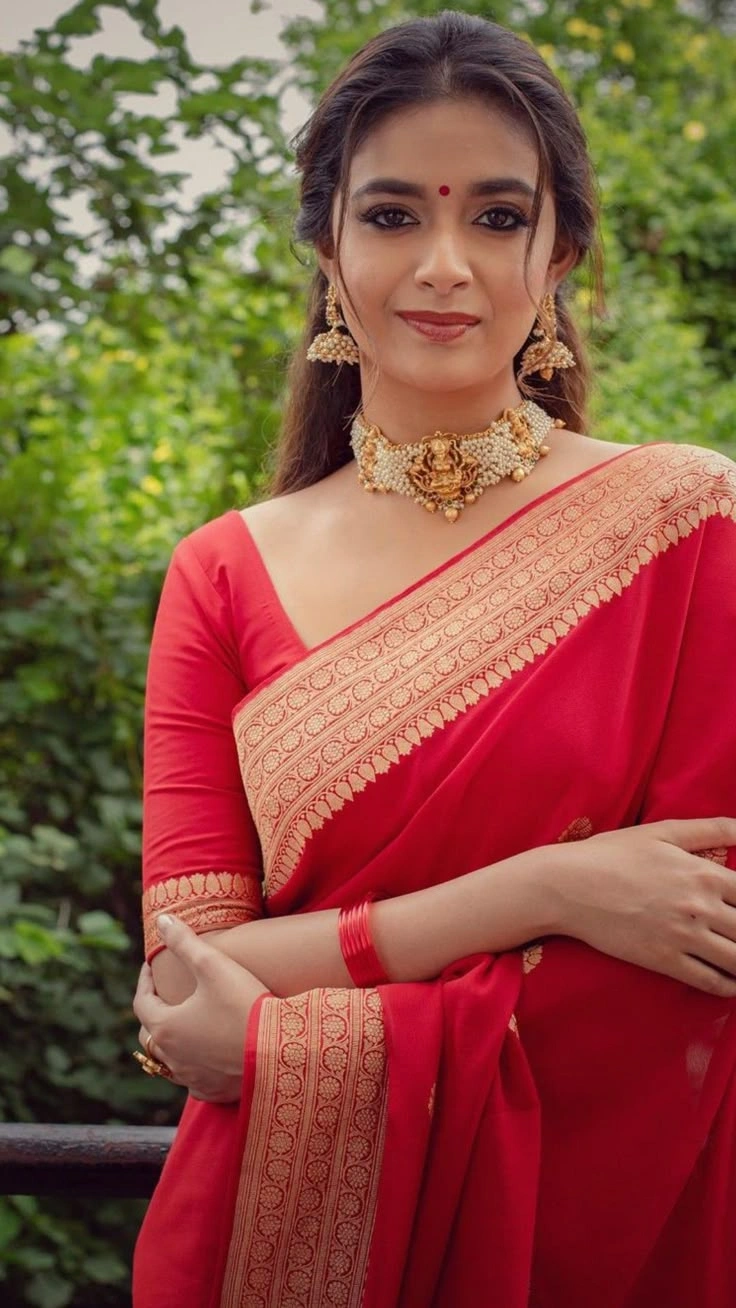
Oil Massage (Thala Abhyangam) – Weekly warm oil massages improve scalp circulation and deeply condition hair. Traditional practice involves massaging coconut oil for 15-20 minutes before washing.
Natural Hair Masks – Combinations of yogurt, egg, fenugreek seeds, and hibiscus create protein-rich treatments that strengthen hair from root to tip.
Herbal Hair Wash – Using shikakai, reetha (soapnuts), and amla powder instead of commercial shampoos reduces chemical exposure and maintains natural oils.
Expert Insight: Ayurvedic practitioner Dr. Ramya Krishnan explains: “Traditional South Indian hair care follows Ayurvedic principles of balancing the three doshas. For instance, coconut oil is cooling and perfect for the hot South Indian climate, while sesame oil might be preferred in cooler regions. This region-specific wisdom shows deep understanding of how climate affects hair health.”
Daily Hair Care Practices
- Combing technique – Always comb from ends to roots to prevent breakage
- Air drying – Avoid heat styling whenever possible
- Silk pillowcases – Reduce friction during sleep
- Diet – Include curry leaves, coconut, and sesame seeds in your diet
- Hydration – Drink plenty of water for healthy hair growth
Celebrity South Indian Hairstyle Inspiration
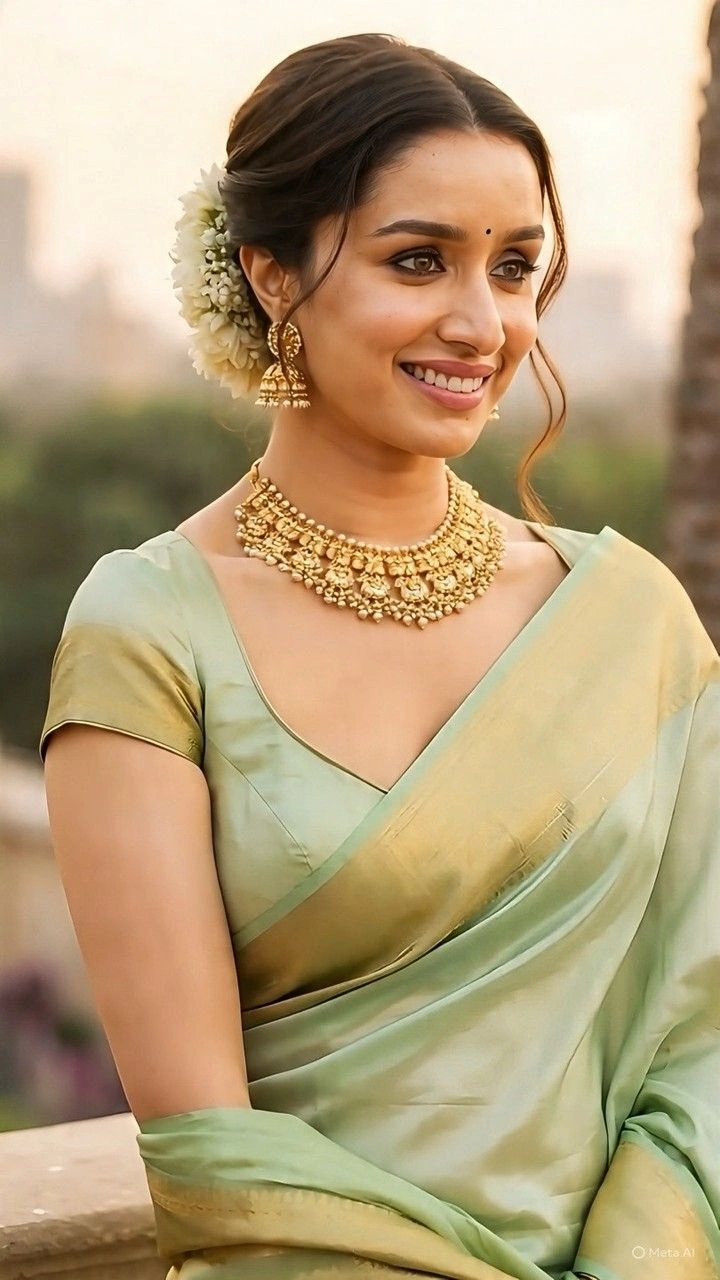
South Indian cinema has given us decades of hairstyle inspiration. From classic actresses to contemporary stars, these icons have showcased south indian hairstyle elegance on screen and red carpets.
Iconic Looks Through the Decades
1960s-70s: Actresses like Savitri and Jayalalithaa popularized the voluminous kondai with elaborate floral decorations, setting standards that lasted decades.
1980s-90s: The jasmine bun reached peak popularity, with every leading actress sporting this style in romantic songs and wedding sequences.
2000s-Present: Contemporary actresses like Nayanthara, Samantha Ruth Prabhu, and Anushka Shetty have modernized traditional styles, often wearing fusion looks that blend heritage with high fashion.
These celebrities have shown that south indian hairstyle options aren’t limited to traditional contexts—they can be adapted for modern fashion, international events, and contemporary aesthetics while retaining their cultural essence.
Maintaining Your South Indian Hairstyle Throughout the Day
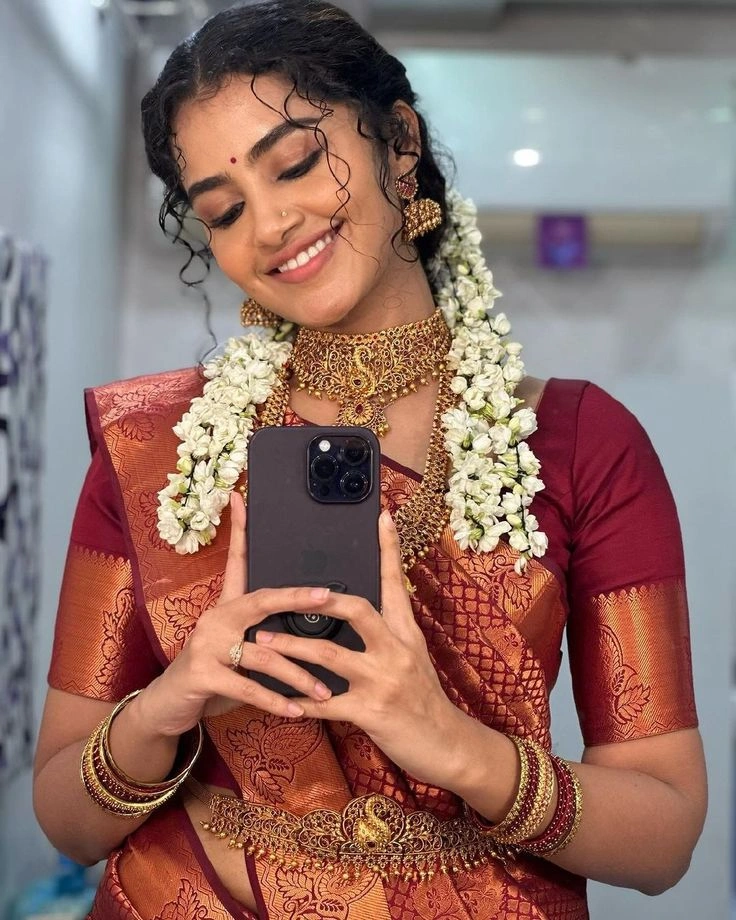
You’ve spent 30 minutes creating the perfect south indian hairstyle—now how do you keep it looking fresh all day?
Setting Your Style
Hairspray is your friend – A light misting locks everything in place Strategic pinning – Criss-cross bobby pins for maximum hold Texture matters – Slightly textured hair holds styles better than silky smooth hair Net overlay – For extra security during important events
Emergency Fixes
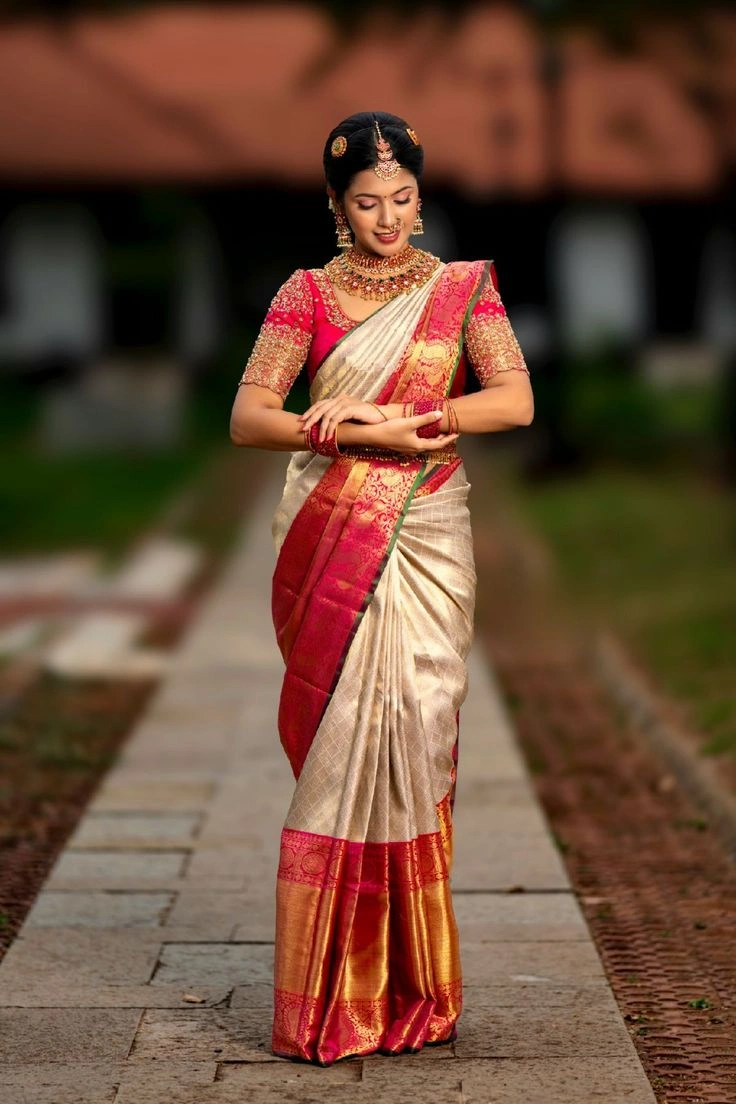
Keep a small emergency kit with:
- Extra bobby pins (you’ll need them!)
- Mini hairspray bottle
- Small comb or brush
- Spare flowers (fresh or artificial)
- Elastic hair ties
Refreshing Your Style
By evening, your jasmine might wilt or your bun might loosen. Quick fixes include:
- Adding fresh flowers to cover tired ones
- Re-pinning loose sections
- Light misting with water and hairspray to refresh
- Gentle finger-combing of loose sections
Conclusion: Celebrating Heritage Through Hair
The world of south indian hairstyle options is vast, beautiful, and deeply meaningful. These aren’t just ways to arrange hair—they’re living traditions that connect us to centuries of cultural heritage, artistic expression, and feminine beauty standards that prioritize elegance, health, and authenticity.
Read More: Shahid Kapoor Hairstyle, Shubman Gill Hairstyle, Virat Kohli Hairstyle, Boys Hairstyle
Frequently Asked Questions
Q1: How long does hair need to be for traditional South Indian hairstyles?
A: Most traditional south indian hairstyle options work best with hair that’s at least shoulder-length or longer. However, many styles can be adapted for medium-length hair, and extensions can be used to create fuller, longer looks for special occasions. Braided styles typically require at least 6-8 inches of hair length.
Q2: Can I sleep with these hairstyles, or do I need to redo them daily?
A: Simple braids can be slept in and will last multiple days with proper care. However, elaborate buns with flowers should be redone daily for freshness and hygiene. The flowers will wilt overnight, and sleeping in tight buns can cause discomfort and hair damage. For overnight wear, loosely braid your hair and redo the style in the morning.
Q3: Where can I buy authentic jasmine gajra if I don’t live in South India?
A: Fresh jasmine gajra can sometimes be found in Indian neighborhoods at flower markets or shops near temples. Many Indian grocery stores also carry them. Alternatively, high-quality artificial gajra is available online through platforms like Amazon, Etsy, and specialized Indian jewelry websites. For special occasions, some florists can create custom jasmine garlands with advance notice.
Q4: Are these hairstyles damaging to hair?
A: When done correctly with proper technique and not too much tension, south indian hairstyle options are generally safe for hair. In fact, traditional practices emphasize hair health through oil treatments and natural products. However, styles that are too tight, left in for too long, or created with harsh products can cause breakage. Always prioritize comfort and your hair’s health over aesthetics.
Q5: Can non-South Indian people wear these hairstyles?
A: Absolutely! Hair has no cultural boundaries when worn with respect and appreciation. Many people worldwide appreciate and wear South Indian-inspired hairstyles. The key is understanding the cultural context, giving credit where it’s due, and wearing these styles with genuine appreciation rather than as a costume or trend without acknowledgment of their origins.
Explore More Blogs at Thestylemyhair
